
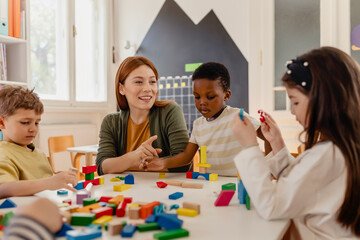
Group therapy has become one of the most effective and supportive approaches for helping children develop essential life skills. In a world where social connections, emotional expression, and positive behavior shape a child’s future, group therapy provides a safe and nurturing environment where children learn, grow, and thrive together.
Whether a child struggles with communication, confidence, emotional regulation, or social interaction, group therapy creates a shared space where they can express themselves openly and feel understood. At Cooper Speech Therapy Centre, Siliguri, group therapy sessions are carefully designed to support children’s developmental, social, and emotional needs through guided activities, peer interaction, and therapist-led exercises.
In this blog, we explore why group therapy is so powerful, what happens during sessions, and how children benefit from learning in a supportive group environment.
1. Building Social Skills in a Natural Setting
One of the biggest challenges children face today is developing strong social skills. Many kids struggle with initiating conversations, sharing, understanding personal boundaries, or recognizing social cues.
Group therapy provides a real-life social environment where children safely practice these skills.
During sessions, children participate in:
- Turn-taking games
- Group activities
- Role-play scenarios
- Circle-time discussions
These structured interactions help children learn:
- How to communicate respectfully
- How to wait and share
- How to understand body language
- How to resolve small conflicts
- How to cooperate with peers
Over time, children gain confidence in interacting with others and slowly begin to apply these skills outside the therapy room—at school, home, and social gatherings.
2. Emotional Support, Expression & Understanding
Children often struggle to express what they feel. Some may bottle up emotions, while others may express them through anger, crying, or withdrawal. Group therapy allows children to understand that they are not alone in their struggles.
Here, kids openly talk about:
- Worries
- Frustrations
- Happy moments
- Challenges they face at school or home
When children listen to others with similar experiences, they begin to develop emotional awareness and empathy.
Therapists guide children on:
- How to identify emotions
- How to express feelings in a healthy way
- How to cope with anxiety or disappointment
- How to stay calm in difficult situations
This supportive environment makes children feel heard, valued, and emotionally secure.
3. Learning From Others: The Power of Peer Modeling
Children learn best by observing. When they see another child communicating confidently, solving a puzzle, or following instructions, they naturally begin to imitate the behavior.
This process, known as peer modeling, is one of the strongest learning tools in group therapy.
For example:
- A shy child becomes more talkative after watching others participate
- A child who avoids eye contact starts making eye contact when peers do the same
- A child who struggles with speech improves by listening to others speak
Peer influence promotes positive change and makes learning enjoyable and non-pressuring.
4. Boosting Confidence & Encouraging Positive Behavior
Confidence plays a major role in a child’s overall development. Group therapy builds confidence through small wins, appreciation, teamwork, and consistent encouragement.
Children participate in activities like:
- Group games
- Creativity challenges
- Storytelling sessions
- Problem-solving tasks
- Art & play therapy
Each activity helps children discover their unique strengths, talents, and abilities.
Therapists also use positive reinforcement to:
- Celebrate achievements
- Encourage participation
- Reward positive behavior
- Motivate consistent improvement
Gradually, children begin to believe in themselves, make independent choices, and display stronger leadership qualities.
5. Creating a Sense of Belonging & Community
Children who struggle socially often feel isolated or misunderstood. Group therapy helps them feel part of a community where:
- They are accepted as they are
- They form friendships naturally
- They share common experiences
- They feel supported and valued
A sense of belonging strengthens emotional resilience and reduces feelings of loneliness or confusion.
6. Who Can Benefit from Group Therapy?
Group therapy is beneficial for children who experience:
- Speech and language delays
- Social communication difficulties
- Behavioral challenges
- ADHD or attention difficulties
- Emotional outbursts
- Shyness or low confidence
- Difficulty making friends
- Autism spectrum–related challenges
- Challenges following instructions or routines
Every child grows differently, and group therapy ensures they receive well-rounded support while learning at their own pace.
7. What Happens in a Typical Group Therapy Session?
A structured group therapy session includes:
Warm-Up Activities
Fun games, songs, or ice-breakers to help kids feel comfortable.
Skill-Based Activities
Exercises designed to improve speech, communication, social interaction, and emotional expression.
Group Games
Turn-taking games, board games, storytelling, or building activities that encourage cooperation.
Therapist-Guided Discussion
Children talk about daily experiences, thoughts, or feelings.
Reflection & Positive Reinforcement
Therapists appreciate every child’s effort, highlight improvements, and encourage participation for the next session.
8. Long-Term Benefits of Group Therapy
Consistent participation in group therapy helps children:
- Communicate more confidently
- Make and maintain friendships
- Manage emotions better
- Improve behavior at school and home
- Become more independent
- Build healthy self-esteem
- Develop leadership and teamwork skills
- Handle social situations with ease