
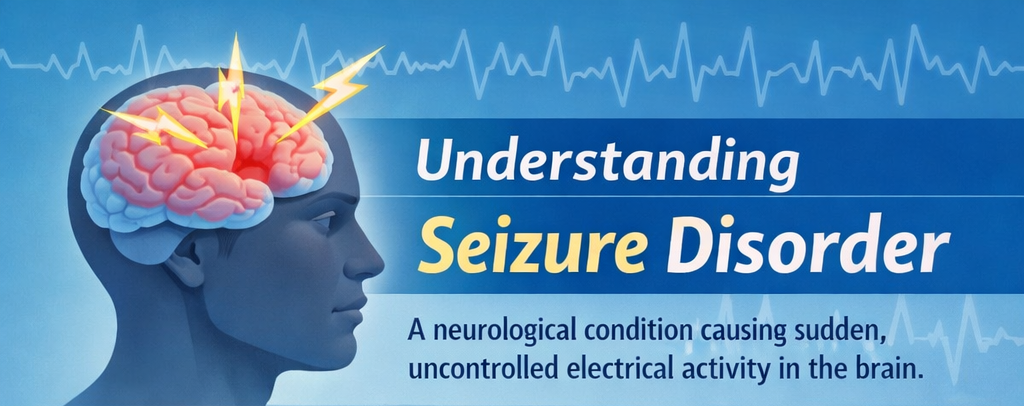
A seizure disorder is a long-term condition that affects how the brain works. It causes sudden episodes Home called seizures, which can change a person’s movements, awareness, emotions, or behavior. Although seizures can look frightening, many people with seizure disorders live normal, successful lives with proper medical care and support.
How Does a Seizure Occur?
The brain communicates through electrical signals. A seizure happens when these signals become abnormal and excessive. This sudden electrical disturbance temporarily interrupts normal brain function, leading to visible or invisible symptoms.
Seizures may last from a few seconds to a few minutes and can happen unexpectedly.
Who Can Develop a Seizure Disorder?
Seizure disorders can affect people of all ages, from infants to older adults. Some individuals are born with a higher risk, while others develop seizures later in life due to illness or injury.
Common risk factors include:
- Head injury or accident
- Infections affecting the brain
- Birth-related complications
- Family history of seizures
- Stroke or brain damage
- High fever during childhood
Different Ways Seizures Can Appear
Not all seizures involve shaking or falling. Some seizures are subtle and easily missed.
Visible Seizures
- Body stiffening or jerking
- Falling suddenly
- Loss of consciousness
- Repetitive movements
Less Obvious Seizures
- Blank staring
- Sudden confusion
- Lip-smacking or hand movements
- Short periods of memory loss
Because symptoms vary, professional evaluation is essential.
Emotional and Social Impact
Living with a seizure disorder can affect emotional well-being. Many people experience:
- Anxiety about having seizures in public
- Fear of injury
- Social stigma or misunderstanding
- Low self-confidence
Support from family, friends, teachers, and employers plays a major role in improving quality of life.
Diagnosis: Finding the Right Answer
Doctors carefully evaluate seizure disorders using:
- Detailed patient history
- EEG tests to check brain activity
- Brain imaging like MRI or CT scans
- Blood tests to rule out other conditions
Correct diagnosis ensures appropriate treatment and better seizure control.
Managing Seizure Disorder
There is no single treatment for everyone, but management is highly effective.
Medical Treatment
- Anti-seizure medicines help control episodes
- Regular follow-ups improve outcomes
Healthy Lifestyle Choices
- Proper sleep routine
- Balanced nutrition
- Avoiding alcohol and smoking
- Stress management techniques
Advanced Treatment Options
- Surgical treatment (in selected cases)
- Neurostimulation devices
- Special diets such as ketogenic diet
Safety Tips for People With Seizures
- Avoid swimming alone
- Use protective gear if advised
- Inform teachers, coworkers, or caregivers
- Take medicines regularly without skipping doses
Small precautions can prevent serious injuries.
What to Do If Someone Has a Seizure
✔ Stay calm
✔ Lay the person on their side
✔ Remove dangerous objects nearby
✔ Loosen tight clothing
✘ Do not put anything in their mouth
✘ Do not hold them down